
The Many Lives of Fuji
Andrew Bernstein, professor of history, pens a sweeping biography of Mount Fuji, one of the world’s most recognizable mountains.

Some mountains defy us with their jagged, lethal loftiness—think of Everest, or the Matterhorn.
Other mountains hypnotize us with their mirage-like, shimmering symmetry, their appearance of hovering in midair. Among these, Japan’s Mount Fuji eclipses all the rest.
In fall 1990, months after graduating from Amherst College, Andrew Bernstein took a teaching job at an English language institute located at Mount Fuji’s southern foot. “I would see Fuji constantly and watch it change with the seasons,” he recalls. “That was when I first climbed Fuji.”
Mount Fuji by the Numbers
Height
12,389 feet
Most recent major eruption
December 1707
Distance from Tokyo
About 62 miles
Climbing season
Early July to early September
Daily limit on climbers
(most popular route to summit)
4,000
Number of climbers in 2024
204,316
Named a UNESCO World Heritage Site
2013
He had no inkling that he would summit the mountain six more times, or that his relationship with Fuji would deepen, eventually leading to the publication of his new book, Fuji: A Mountain in the Making (Princeton University Press, 2025). Fuji offers a sweeping biography of the mountain, from its geological origins and paleolithic inhabitants to its present-day status as a UNESCO World Heritage Site.
Now an L&C professor specializing in Japanese and environmental history, Bernstein dates his passion for Japanese language and culture to the undergraduate year he spent with a homestay family in Kyoto. Later, his interest in Zen Buddhism led him to study the history of Japanese religion at Columbia University, where he completed his PhD in 1999. He has been a member of the Lewis & Clark history department ever since.
The germ for Fuji came in 2005. That year, he put together a conference panel called “Sacred Mountains in 20th-Century Japan,” where he gave a paper about a dispute in postwar Japan over whether the summit of Fuji should be owned by a Shinto shrine at the base of the mountain or the state. As the discussion ended, an attendee pointedly challenged Bernstein’s human-focused approach, saying, “But where’s the mountain?”
At first, Bernstein dismissed the question as irrelevant. Wasn’t this a story about a territorial dispute that reflected broader disagreements concerning the relationship between religion and the state? “But the question stuck with me,” he recalls. “It really stuck with me. And I did what any rational person would do,” he says wryly. “I embarked on a two-decade-long project to understand this mountain in all of its facets.”
Fuji’s early chapters explore the mountain’s geological, archaeological, and early written record. One of Japan’s most beloved stories, The Tale of the Bamboo Cutter, dates to the late 9th or early 10th century. It establishes Fuji as a realm of immortals, far beyond the mundane world of ordinary humans. In Japanese lore and history, the volcano was associated with dangers such as eruptions, famine, and epidemics. Nevertheless, the Fuji worship groups (Fujikō) that sprang up from the 1600s to the 1800s regarded the mountain as the cosmic Father and Mother, the source of all life. As Bernstein writes, “People projected all sorts of beliefs onto Fuji, yet this did not change the fact that it acted according to its own geological devices, sometimes to terrible effect.”
-
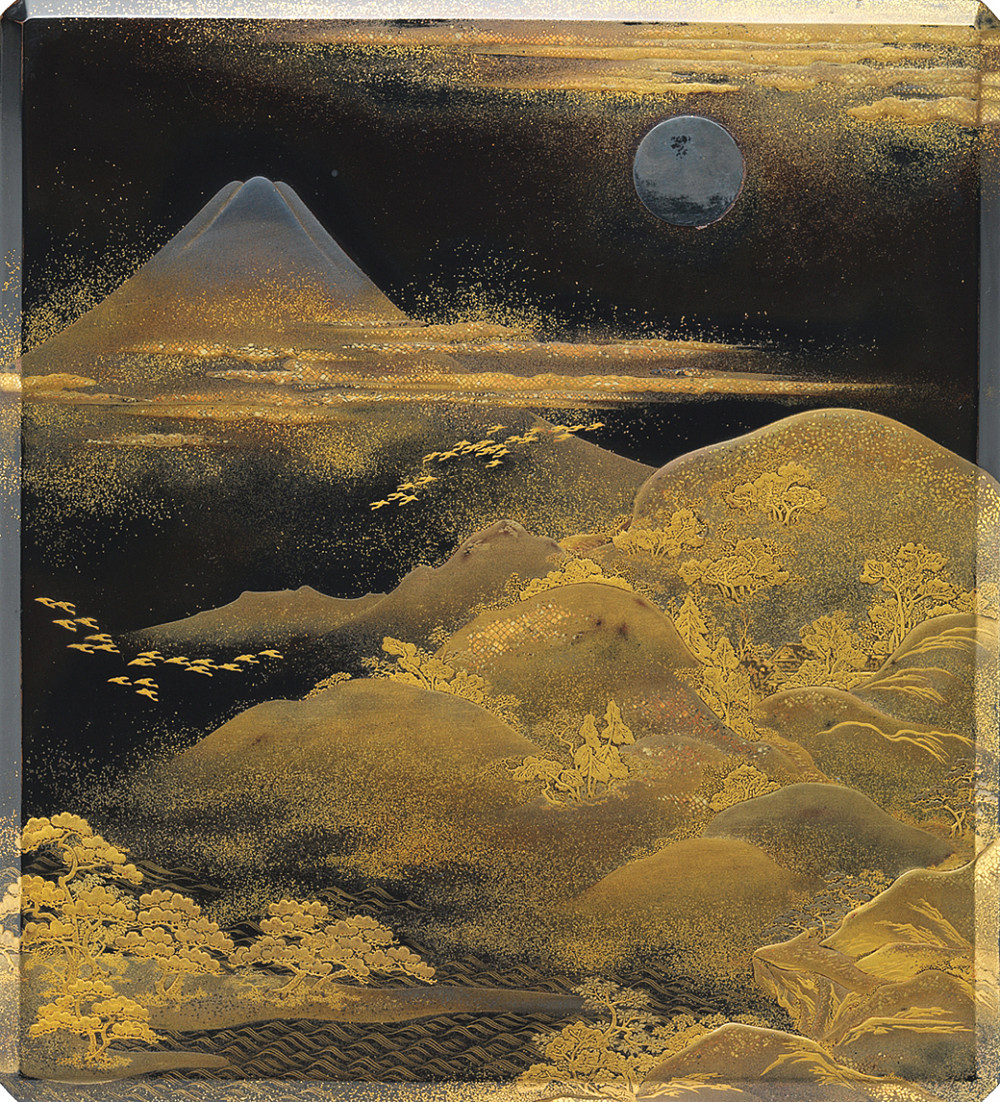 Geese in flight against a moonlit Mount Fuji adorn this elegant lacquer box (suzuribako) for writing implements, created in the early to mid-19th century. (Credit: Metropolitan Museum, New York)Credit: Metropolitan Museum, New York
 -
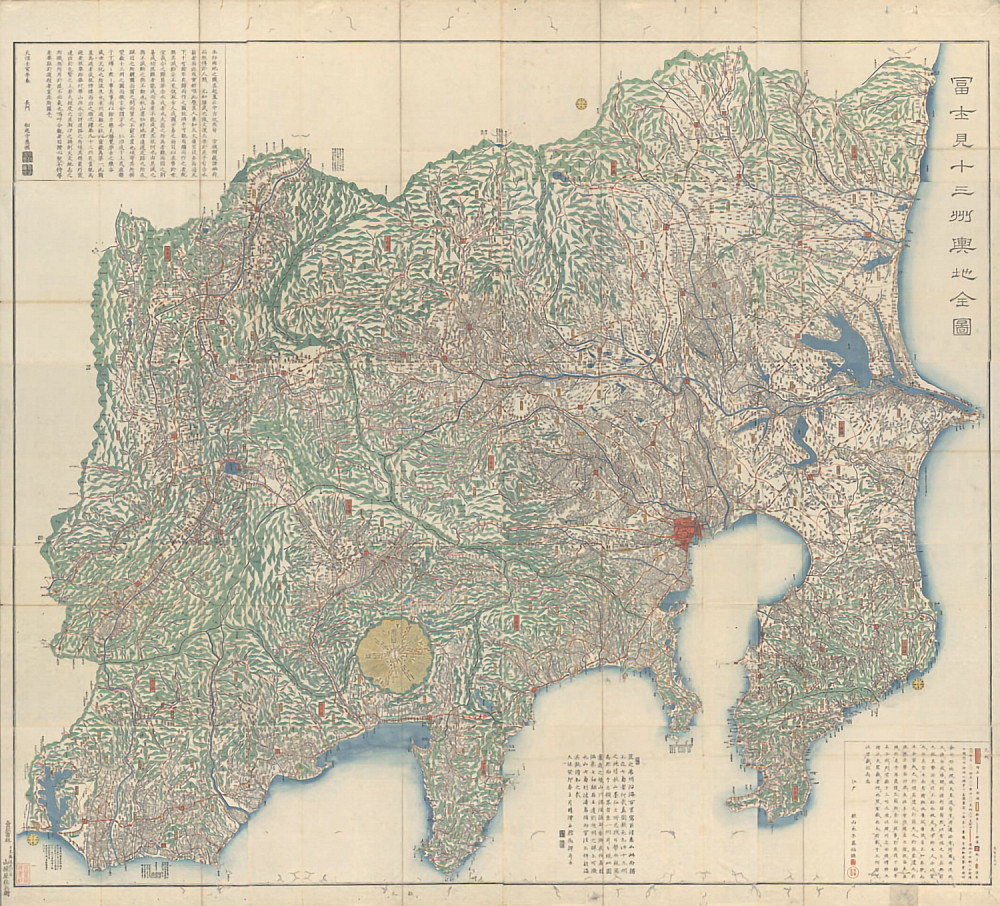 Akiyama Einen’s Map of the Thirteen Provinces from which to View Fuji (1843) provides a top-down view of Fuji, shown in yellow, along with the regions from which the mountain can be seen. Large enough to walk on, the map depicts notable features and sites like rivers, mountains, roads, towns, battlefields, Buddhist temples, and hot springs. (Credit: University of British Columbia Library, G7962.H6 E635 1843 A5)Credit: University of British Columbia Library, G7962.H6 E635 1843 A5
 -
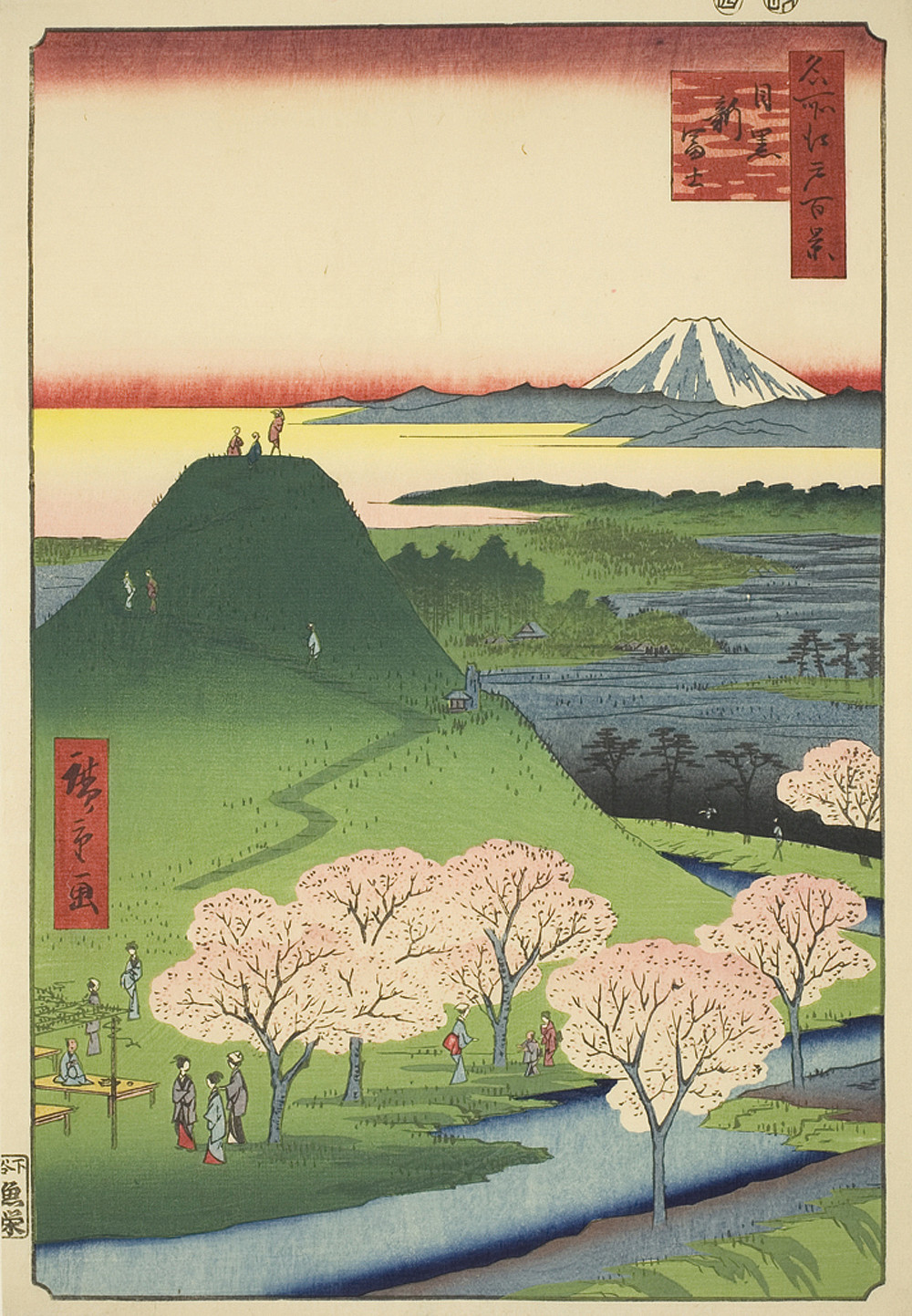 New Fuji, Meguro (1857), a woodblock print by Utagawa Hiroshige, shows people climbing a “mini-Fuji” (Fujizuka) to view the original mountain in the distance. (Credit: Art Institute of Chicago)Credit: Art Institute of Chicago
 -
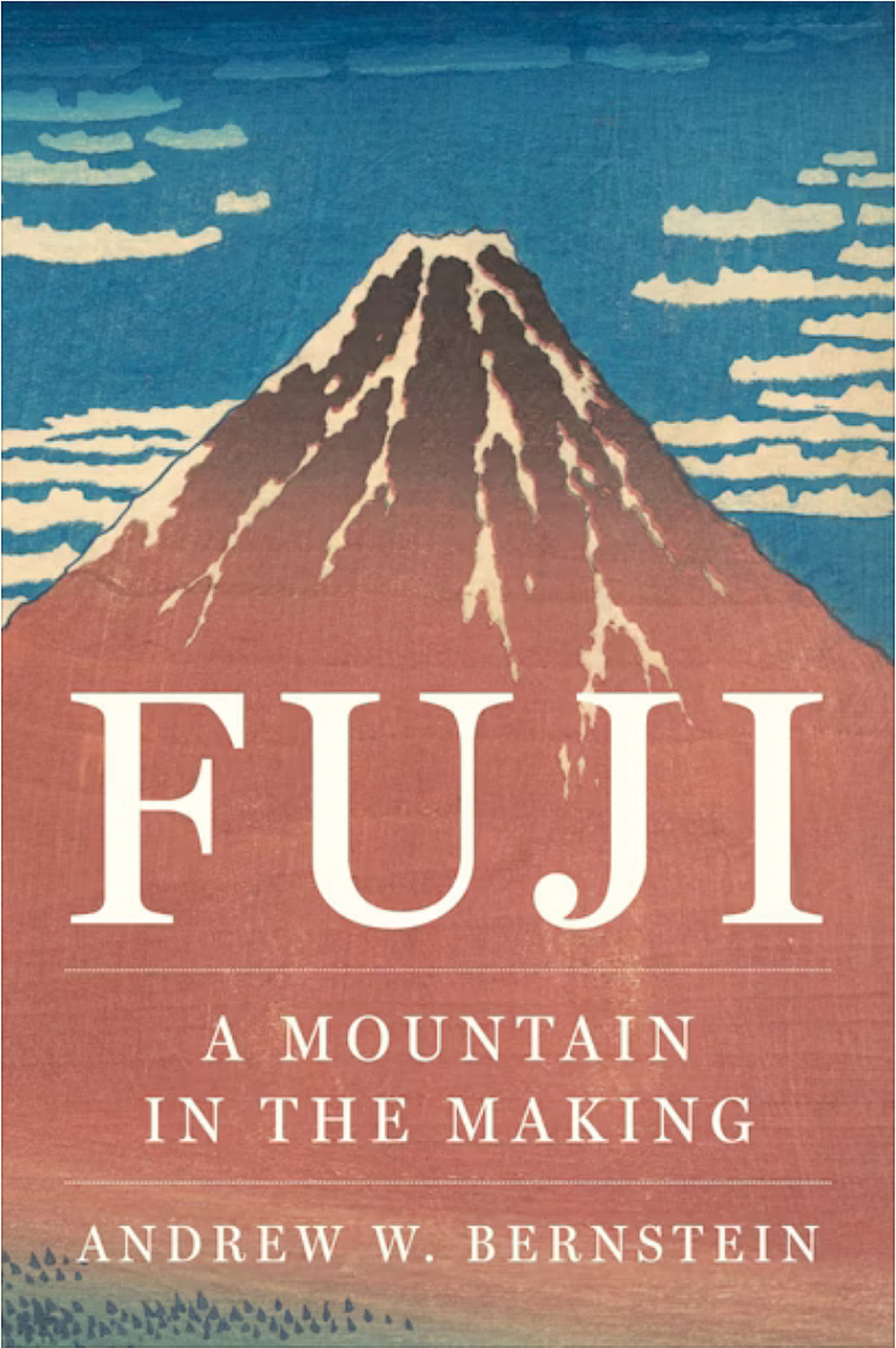 The cover of Bernstein’s new book. (Credit: Princeton University Press)Credit: Princeton University Press
 -
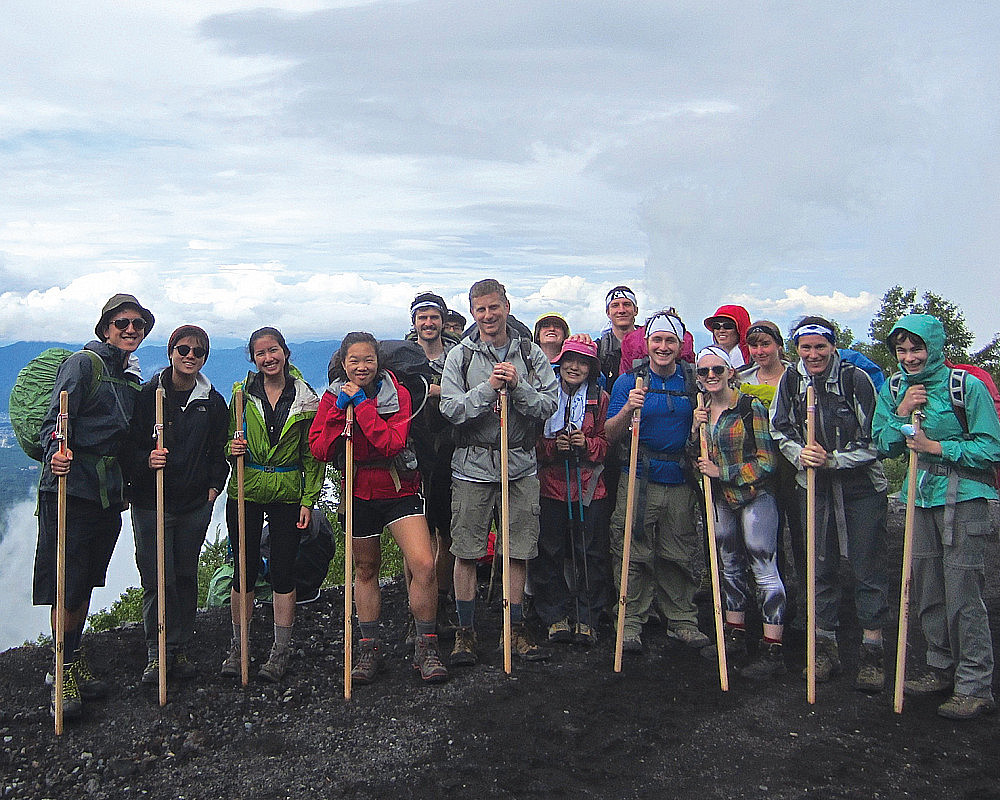 During an overseas study program in 2014, Professor Bernstein and Professor Elizabeth Safran led their students to Fuji’s summit. (Credit: Andrew Bernstein)Credit: Andrew Bernstein
 -
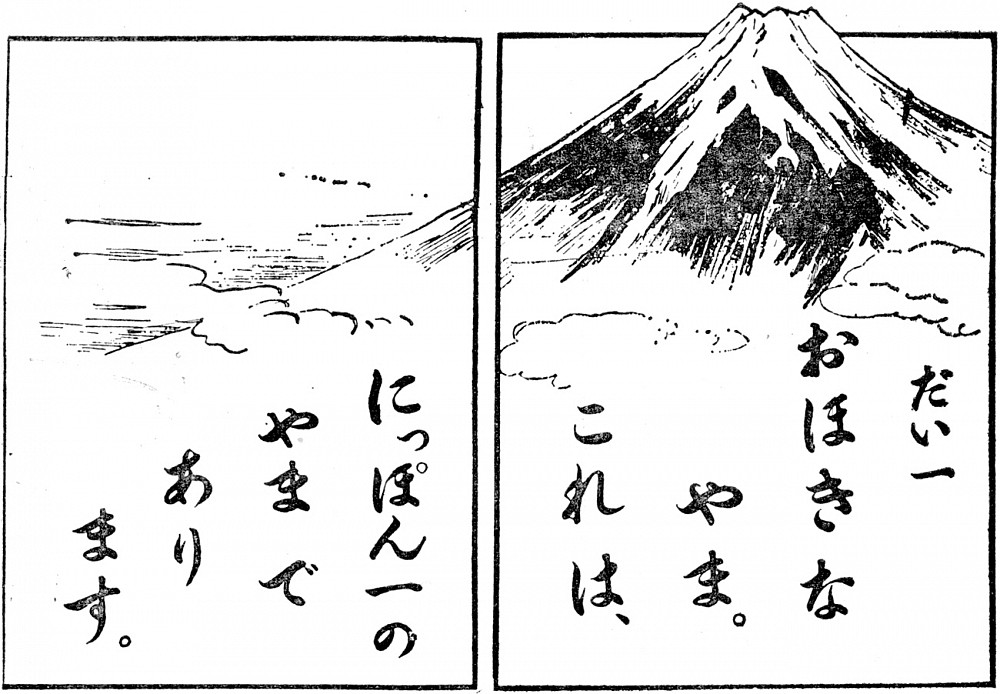 Fuji from a children’s Japanese primer published in 1900. The words read: “A big mountain. This is Japan’s greatest mountain.” (Credit: Nihon kyōkasho taikei kindaihen (Kodansha, 1964))Credit: Nihon kyōkasho taikei kindaihen (Kodansha, 1964),
 -
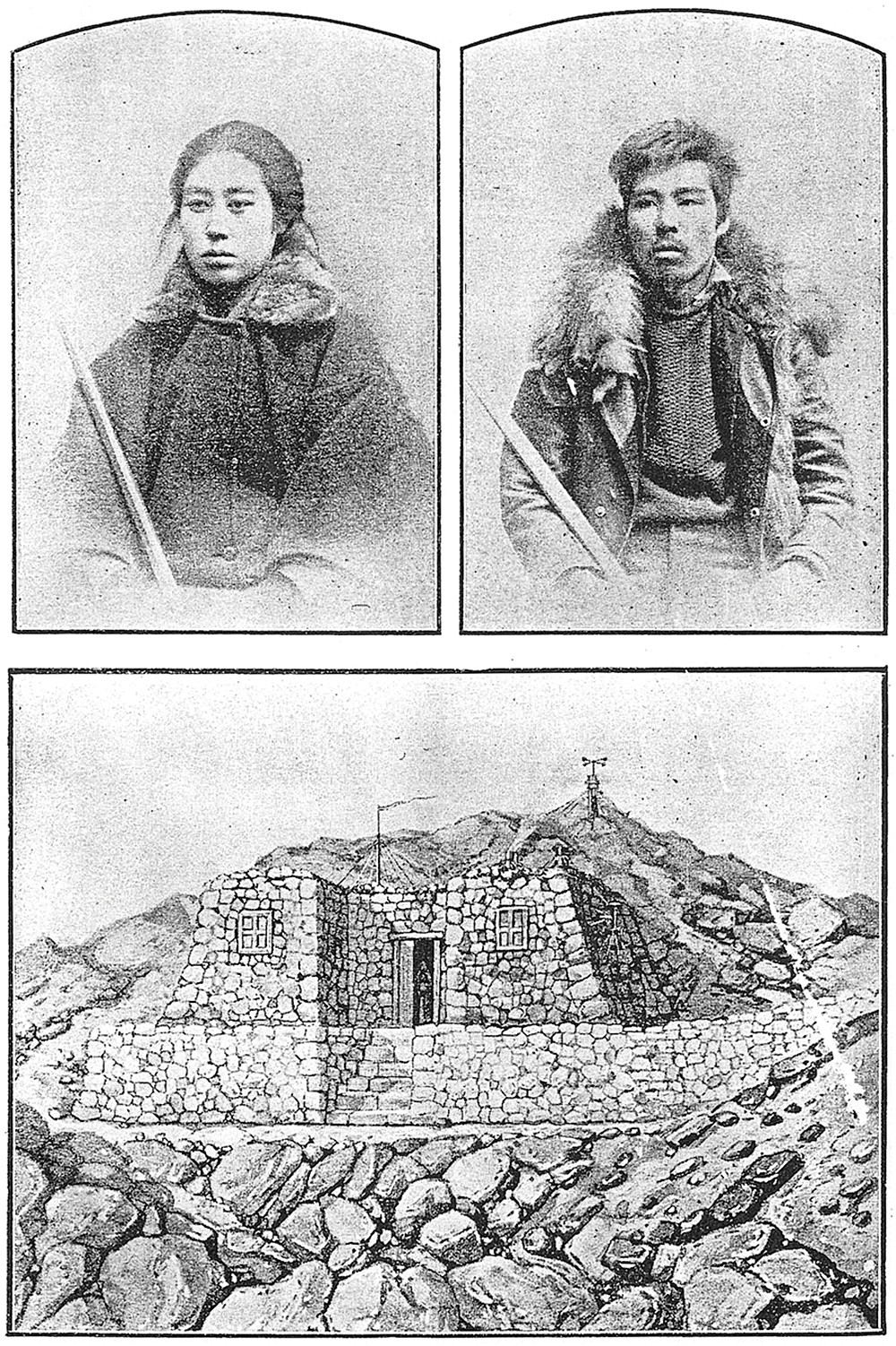 Meteorologists Nonaka Chiyoko and Itaru, a married couple, had a near-death experience while collecting weather data on Fuji’s summit during the winter of 1895–96 (their observatory shown below). (Credit: Takane no yuki (Meiji Shoin, 1896))Credit: Takane no yuki (Meiji Shoin, 1896),
 -
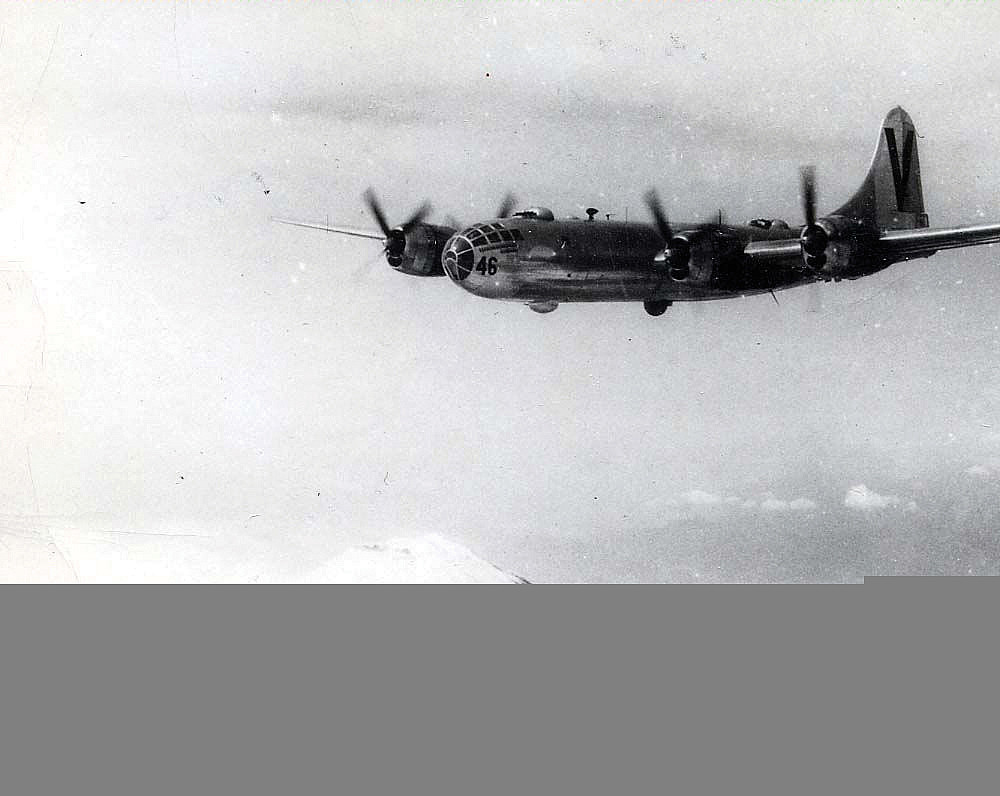 An American B-29 bomber flies over Mount Fuji (1945). (Credit: U.S. Army Air Forces, Wikimedia Commons)Credit: U.S. Army Air Forces, Wikimedia Commons


Throughout Bernstein’s biography of the mountain, Fuji is no mere landscape, with its implication of a static and passive terrain, acted upon by its human inhabitants. Far from it. Standing on the rim of the Pacific “Ring of Fire,” the volcano marks the triple junction of three major tectonic plates, and it lies a comparatively short distance from the huge Pacific plate. It erupted violently in 864–66 (the Jōgan eruption) and 1707 (the Hōei eruption) and is still regarded as an active volcano with the potential to devastate surrounding communities, including Tokyo, the world’s largest metropolitan area, with 41 million inhabitants.
After several eruptions in the 11th century, there came a long period of relative geologic calm, when the mountain mostly spewed only steam. Then on December 16, 1707, Fuji began an explosive eruption that lasted two weeks. Remarkably, the event itself killed only 30 people (according to surviving records, at least), but the loss of farmland and irrigation systems—buried in basaltic rubble—would create misery and starvation for many decades.
In this same period arose the remarkable religious figure Jikigyō Miroku (1671–1733), a Fujik ¯o devotee who rebuked Japanese leaders for failing to alleviate their people’s suffering. The Fuji deity known as Great Bodhisattva Sengen instructed Jikigyō to save all living things by fasting to death on the high slopes of Mount Fuji. His self-sacrifice heightened the influence of the Fujik ¯o sect, and the 18th and 19th centuries marked an era of pilgrimages to the mountaintop. Women were legally forbidden to climb the mountain until 1872 (with a one-time exception in 1860, a special anniversary of the mountain’s traditional “birth”). But even so, they found ways to thwart the rules.
The word ‘landscape’ implies something static, a scene that you look at, right? Whereas bodyscape, bringing together the word ‘body’ and ‘scape’ from ‘landscape,’ is more dynamic.”
By the mid-19th century, the mountain was regarded not only as the “pride of Edo” (today’s Tokyo) but also as Japan’s symbol of national pride. Much of the credit for this prominence goes not only to globalization in general but to two artists in particular: Katsushika Hokusai (1760–1849) and Utagawa Hiroshige (1797–1858), both of whom created iconic and widely disseminated depictions of Fuji.
Throughout this biography of a mountain, Bernstein describes Fuji as a “bodyscape,” a term he devised as a way of acknowledging the active role of any place inhabited by humans, but Fuji in particular. As he explains it, “The word ‘landscape’ implies something static, a scene that you look at, right? Whereas bodyscape, bringing together the word ‘body’ and ‘scape’ from ‘landscape,’ is more dynamic. It treats geological features like Mount Fuji as bodies mutually interacting with other bodies.”
The term also arose from his evolving understanding of the field known as environmental history, the study of human interactions with the natural world over time—a discipline he had barely encountered in college or grad school. Knowing it would be critical to his Fuji project, and following the truism that “if you want to learn something, teach it,” Bernstein created an environmental history course for L&C juniors and seniors. After that, he designed a lower-level course in global environmental history—a course that he still teaches every year.
He also teamed up with Elizabeth Safran, associate professor of geological science, to lead two overseas study programs to Japan in 2014 and 2017. Focused on Mount Fuji, the seven-week multidisciplinary programs included fieldwork to better understand the volcano’s basalt-based geomorphology, its network of freshwater springs and lakes, and their role in such industries as tourism, sake brewing, tea cultivation, silk production, and even toilet paper manufacturing. Students visited religious sites and witnessed a ceremony marking the opening of Mount Fuji’s traditional climbing season. And, of course, they climbed Fuji and saw the sunrise from the summit.
These overseas study programs were not the only trips Bernstein took for his research on Fuji. He fondly remembers his visits to Waseda University Library in Shinjuku, Tokyo, where he found a trove of early 20th-century government-issued children’s textbooks extolling the beauty of Mount Fuji and even describing how to draw and paint it. And, in perusing popular magazines in the library’s “wonderful” open stacks, he stumbled across an 1896 article about two meteorologists, a husband-and-wife couple named Nonaka Itaru and Nonaka Chiyoko. Their near-death experience while collecting winter weather data on the summit of Mount Fuji was simply too good a story not to include in the book.
Bernstein says the concluding chapter of Fuji—about the mountain’s designation in 2013 as a UNESCO World Heritage Site—was the most gratifying to write, because it encapsulates his view of the mountain as a dynamic force rather than a static symbol. “It was a great way to reflect on the boundary people draw between nature and culture,” he says, “which really exists more in our minds than in reality.”
Ironically, Fuji’s original nomination as a UNESCO natural heritage site was blocked, on the grounds that it is not geologically unique—many similar stratovolcanoes exist. A new request to be designated as a cultural heritage site found success, despite loud objections from stakeholders such as celebrity mountaineer Noguchi Ken, who has waged a campaign to clean up the dismaying amount of trash on Fuji.
The discomforting fact is, Fuji is no pristine mirage in the sky. Military training areas used by the Japanese and U.S. armed forces occupy a big chunk of its grassy skirt. Paper mills and other polluting industries dot the terrain. The mountain’s sprawling tourism infrastructure includes the popular Fuji-Q Highland amusement park, golf courses, the Fuji Speedway, and the Fuji Safari Park. None of these businesses are conducive to experiencing Fuji as a sacred, historic pilgrimage site. Nor are they seen or even mentioned in the idealized one-minute video of the mountain on UNESCO’s Mount Fuji web page.
Fuji: A Mountain in the Making offers a far more nuanced view. “It is only by accounting for the good and the bad, the beautiful and the ugly,” Bernstein’s book concludes, “that we can do historical justice to the multiple lives of Fuji and, one could argue, even more fully celebrate this famous but in many ways hidden peak.”
More Stories

Cover Story
Tough Questions
How can we address some of today’s most vexing issues? Seven alumni experts share their best ideas.


Feature
GO OTTS!
Capping an intensive collaboration with Portland advertising legends Wieden+Kennedy, Lewis & Clark has unveiled the design of its new River Otter Mascot.

Feature
The Job Market Is Changing. So Are We.
How is Lewis & Clark preparing students for a job market shaped by AI disruption, economic uncertainty, and shifting employer expectations?